
Early Lessons from the Powering Economic Opportunity Fund
Since 2020, the clean energy sector has added more than 520,000 jobs, with $279 billion invested in clean energy development across the U.S. in the past year alone. Yet for many workers who need these opportunities most, the pathway to access them remains unclear.
In April 2025, GitLab Foundation and Families and Workers Fund (FWF) launched the Powering Economic Opportunity Fund, a two-year, $16 million partnership designed to connect workers directly to careers in these high-growth industries.
The fund is focused on emerging localized talent demand, identifying regions where job growth is surging and helping local workers gain access to these sectors. Nearly a year in, we’ve seen bright spots in what works and how to build pathways to last.
Meeting workers where they are
The fund’s approach has come to life in communities across the country, each facing unique workforce struggles. In Arizona, the massive growth of construction jobs has local leaders scrambling to set up training programs that can keep pace. TechSmart Learning Fund, an Arizona-based initiative and grantee, is rising to meet that challenge.
The organization acts as a connector, bringing together educators, employers, government agencies and philanthropies around a shared vision for workforce development. TechSmart's work spans the full pipeline from STEM engagement for K-12 students to apprenticeships and work-based learning for adults seeking credentials.
"Arizona is experiencing huge economic growth, with over $200 billion in semiconductor industry investment pouring into Phoenix to create new opportunities," said Pearl Esau, founder and CEO of TechSmart. "Support from the Powering Economic Opportunity Fund and our grantee partners has been critical to advancing TechSmart's impact. Participating in this cohort has allowed us to ensure those furthest from opportunity can access quality technician training and strengthen collaboration across education and industry partners, which is essential to a thriving regional talent ecosystem."
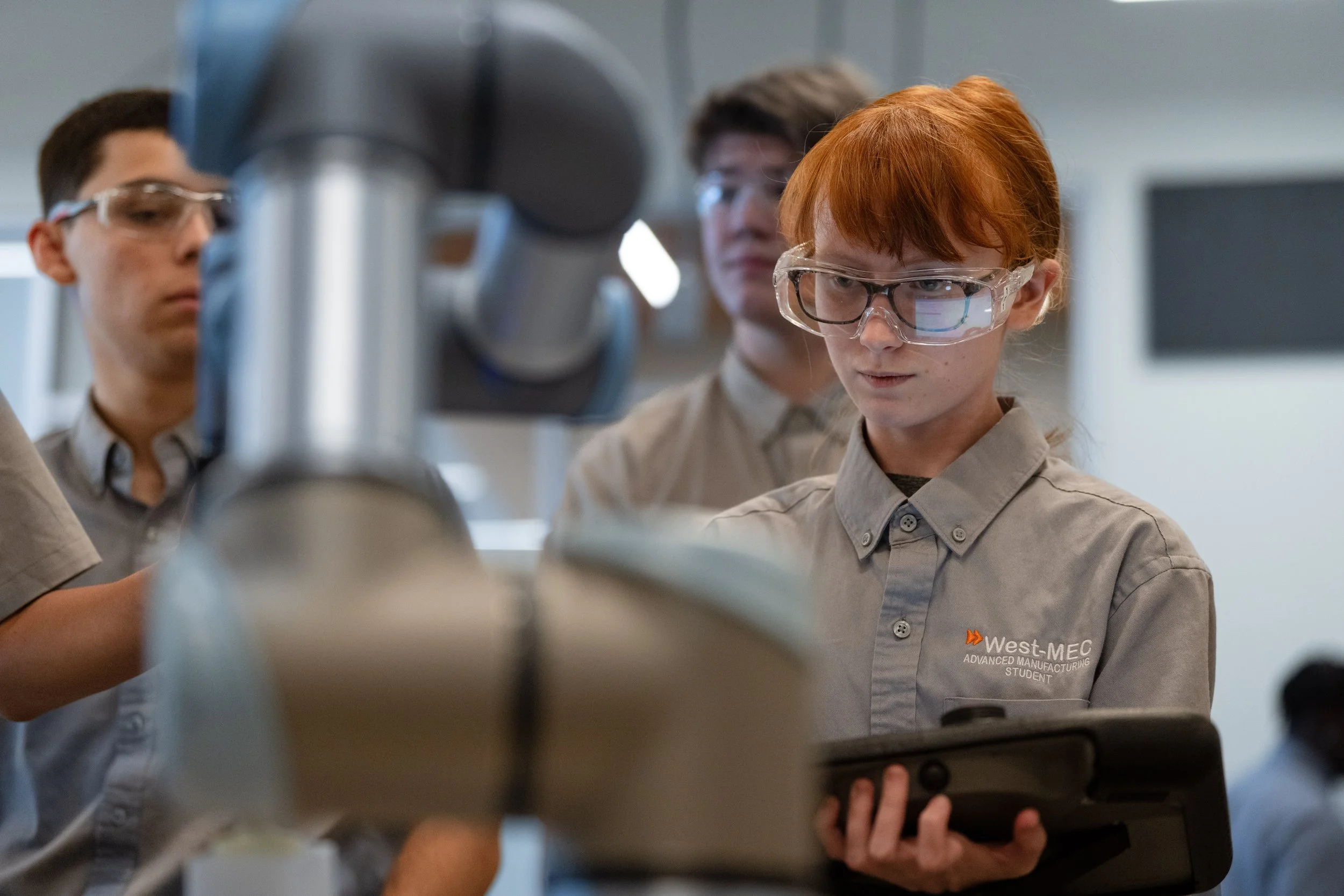
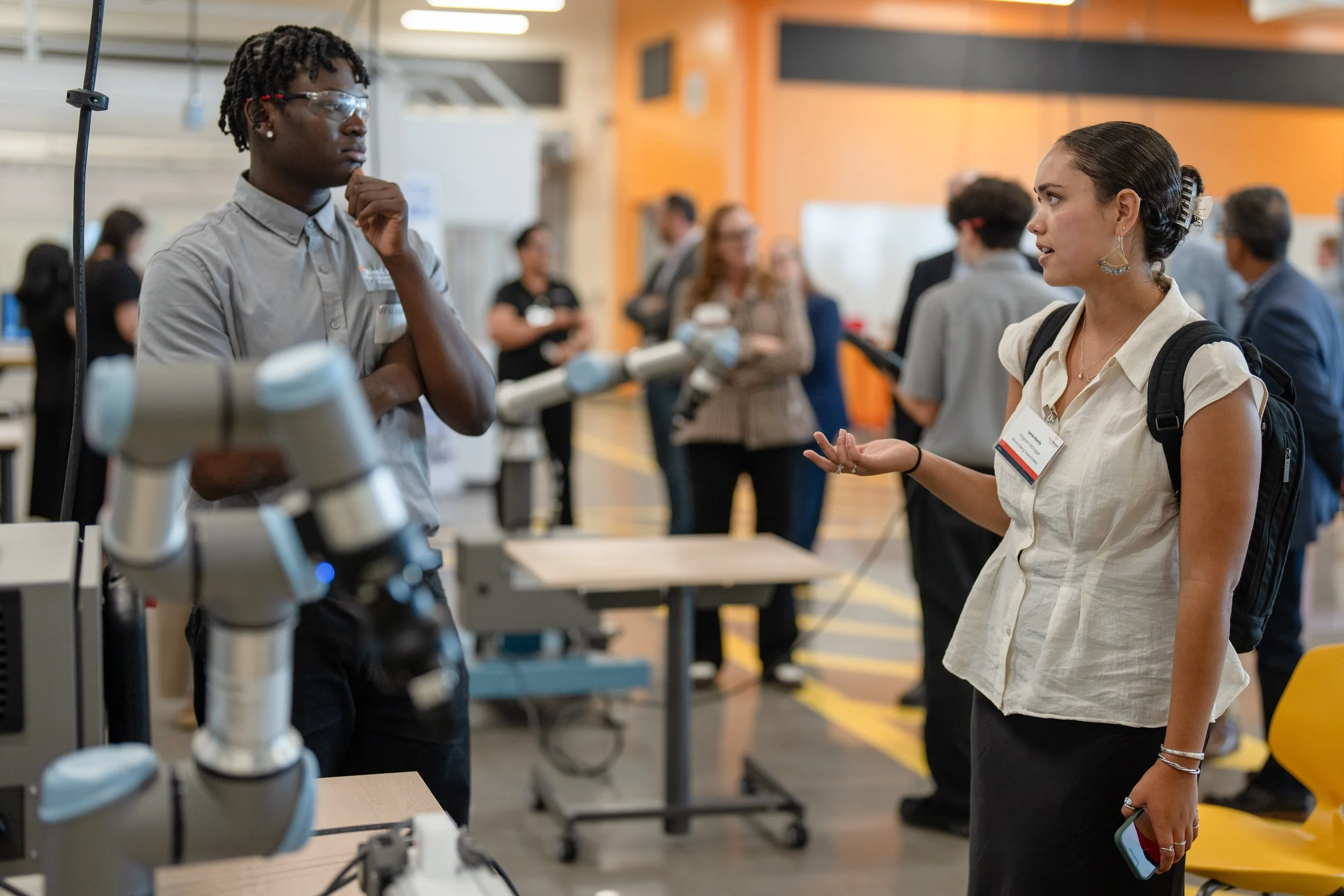
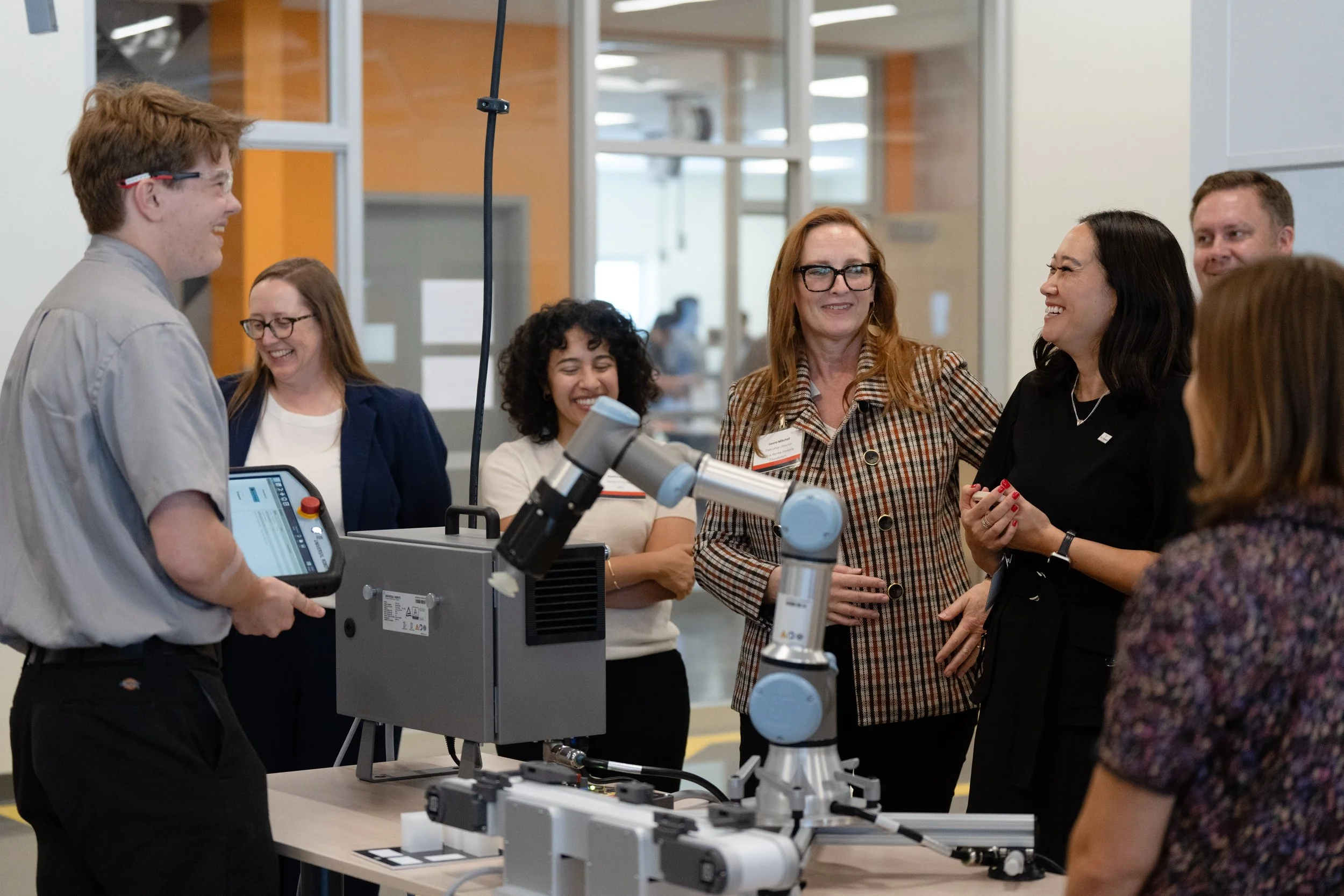
West-MEC students taking part in a technician training program supported by TechSmart Learning Fund.
In Chicago, the Jane Addams Resource Corporation will train 2,000 workers for quality manufacturing jobs, scaling its Computer Numeric Control welding training program from Chicago to two additional cities in the Northeast and Midwest. These two pilots are part of their “Replication Playbook,” an effort aiming to scale best practices and models for workforce development organizations.
Meanwhile, The Center for Energy Workforce Development, in collaboration with the National Urban League, is expanding the Urban Energy Jobs Program to up to 17 Urban League Affiliate sites, placing 1,000 people living in or near poverty into registered energy and utility apprenticeships and full-time careers — opportunities with clear routes to the middle class.
Across these grantees and others, three key themes are driving success.
What’s working
Employer partnerships drive better outcomes
Organizations with employer connections typically have better success rates. These connections help them identify employer hiring trends, the best ways to support new workers and where to upskill. Grantees like Cal EPIC and Machinists Institute have established direct partnerships with Boeing and Rivian, an electric vehicle manufacturer, to identify skills gaps, adapt training curricula in real time and create pipelines that place workers into open roles.
Industry alignment matters
The fund targeted manufacturing, renewable energy and infrastructure based on strong job and income potential. Though the broader economic landscape has changed, bright spots still exist in specific regions where these industries continue to thrive. Shaping Our Appalachian Region demonstrates the power of local alignment, working hand-in-hand with energy providers in their area to understand what skills and talent they’re looking for and train workers for available positions. Success comes from matching training to what’s actually happening on the ground.
Wraparound support is crucial for success
Training alone doesn’t guarantee strong placement numbers.
High retention rates, job satisfaction and placement outcomes rely heavily on transportation support, childcare subsidiaries and ongoing training and upskilling opportunities. When programs are designed with these supports in mind, there’s a far greater impact. Cal EPIC, for example, provides stipends to community college students to cover essential expenses like transportation to class that make it easier for them to complete their coursework and ultimately advance their careers.
“Working alongside Families and Workers Fund and our grantees has shown us that sustainable workforce development relies on more than funding,” said Roger Perez, senior program officer at GitLab Foundation. “It demands deep local knowledge, strong employer relationships and wraparound supports that meet workers’ real needs.”
Building on what GitLab Foundation has learned, the second round of the Powering Economic Opportunity Fund will open at the end of February. The pathway to millions of new jobs in renewable energy, infrastructure and advanced manufacturing is becoming clearer through community-rooted grantees that understand what workers need and what employers demand.
The ROI for these projects is estimated to be 316x.
The projects are estimated to increase annual earnings by $26,977 per person - an average increase of 95%.
We project that 6,272 individuals will benefit from these initiatives.
The total lifetime earnings increase across all participants is estimated to be $4.49 billion.
